Introduction
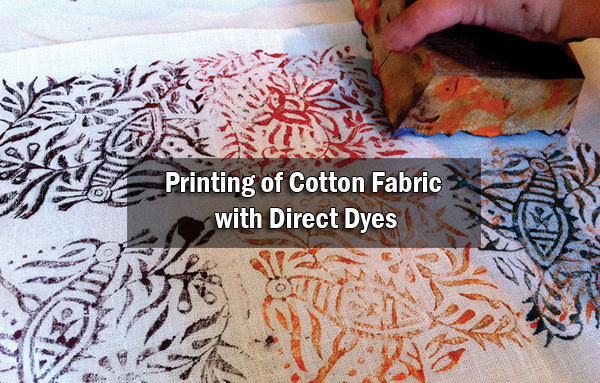
When a fabric is printed, the fiber type often decides which dye will give the best result. Reactive dyes, vat dyes, acid dyes, disperse dyes, basic dyes, metal-complex dyes, and pigments each suit different fibers and different printing needs. The choice also depends on fixation method, fabric type, and the finish required after printing. That is why textile printing is rarely a one-dye-fits-all process.
Printing of Cellulosic Fibers with Reactive Dyes
Reactive dyes are widely used for printing cellulosic fabrics. Not all reactive dyes are suitable for printing, and the choice of dye depends on several factors such as fixation method, the style being printed, and the fabric type. High-reactive and low-reactive dyes can be used, and they are available as powders or liquids. It is best to follow the supplier’s recommendations to select the correct dye for a given set of conditions. An extensive colour range is available because of the wide variety of chromophores possible.
Printing of Cellulosic Fibers with Vat Dyes
Vat dyes are used in textile printing on cellulosic goods that require good wash and light fastness. For example, they are used in printing drapes and upholstery fabrics. Vat dyes used in modern printing systems are supplied in liquid or paste form as aqueous dispersions. This makes them suitable for controlled application on cellulosic materials where durability matters.
Printing of Protein Fibers
Acid and metal-complex dyes are the most popular dye classes for wool fiber. Acid dyes offer a wide shade range that varies in brightness and fastness while generally giving good light and wet fastness. Acid dyes are the main dye class for printing silk, although their fastness properties vary with the type of dye chosen. In practice, the fiber and the shade requirement both influence the final selection.
Printing of Polyester Fiber
Polyester is a key synthetic fiber whether it is used alone or in combination with other fibers. Pigments can be used for printing polyester, particularly for cheaper articles and speciality print effects, such as metallics. The main limitation of pigments in the past has been their reduced fastness and harsher handle on polyester. However, with modern printing binders, these restrictions may be reduced. In general, high wet fastness properties can be achieved, but problems in rub fastness can result from poorly prepared fabric, especially if non-ionic surfactants are left in the fabric from previous processes.
For direct printing of polyester, it is necessary to select dyes with high sublimation fastness, as this helps prevent dye migration to adjacent white or coloured areas. Choosing low-affinity dyes will reduce staining of white areas during fixation and wash off.
Disperse Dye Printing on Polyester
Disperse dye is selected for printing polyester. The diffusion of disperse dye into polyester is relatively slow, so it is necessary to use high temperatures for fixation or lower temperatures in conjunction with a carrier. The choice of dye is also dependent on the fixation conditions. Thickeners used in disperse printing are chosen according to the desired end result and the proposed fixation conditions. They must not tend to crack during processing and must be good film formers to prevent mark-off during processing.
Printing of Acetate Fibers
Cellulose acetate is produced from an ester of cellulose and has some affinity for disperse dyes, but its wet durability is limited. Various methods of improving the performance have been tried, including the use of swelling agents in combination with acid, basic, and vat dyes. Basic dyes may also be used for printing cellulose acetate when bright hues are required, but light fastness properties may be limited, which restricts the applications where these dyes can be used.
Cellulose triacetate has a higher degree of esterification than acetate. It is less hydrophilic, less sensitive to alkali, and offers greater mechanical and chemical stability. Disperse dyes are used because of the large colour range and their ease of application, and the printing method is the same as for cellulose acetate. While disperse dyes are mainly used, it is possible to print cellulose triacetate with acid dyes. These offer high colour yield with bright hues and good wet fastness properties. The main advantage would be the improved fastness to dye sublimation, which can be a problem with some disperse dyes. Moreover, if extremely bright prints are required, cellulose triacetate can be printed with basic dye, but the overall fastness properties are inferior.
Printing of Acrylic Fibers
Acrylic is the general name for a series of addition copolymers produced from vinyl compounds, with at least 85% being acrylonitrile. Commercial fibers vary in their characteristics because other groups are incorporated into the polymer. On its own, acrylonitrile has little affinity for dyes. It is necessary to incorporate other products to make the polymer dyeable. Acrylic fibers are widely used for knitwear and in blends with other fibers in dresswear and carpets. They have a tendency to attract dirt because of their relatively low moisture regain and are susceptible to yellowing at heat treatments above 110°C. Drying and fixation conditions are thus critical.
Printing of Polyamide Fibers
Other than acid dye, metal-complex dyes can also be used, particularly where very good fastness to wet treatments and high light fastness are desired. By careful selection of the dyes, it is possible to achieve good fixation under neutral conditions. Hence, no acid-liberating catalyst needs to be incorporated in the previous recipe. It may also be possible to fix without using a fiber-swelling agent. This makes the process a little cleaner in practice when the dye selection is right.
Pigment Printing
Pigment printing and dyeing differs from conventional dyeing and printing processes. Inorganic and organic insoluble pigments with little or no affinity for the fiber are applied to the material with the aid of an adhesive, normally called a binder. Conventional pigment dispersions cannot make a direct bond with the fiber and thus require the use of a binder to adhere the pigments to the substrate. The nature of the binding force is largely determined by the binder type and its ionic charge.
Fixation of the pigment is time and temperature dependent and is normally achieved by a dry-heat cure at temperatures of between 130°C for 5 min to 180°C for 1 min. The specific conditions are determined by the nature of the binder, pigment, substrate, and application conditions. The pigment printing process is relatively simple compared with conventional dye systems, only requiring a print, or pad in the case of dyeing, then drying and curing. Fixation may be achieved during stenter finishing, although a pre-baking process is preferred in the case of heavy shade prints. No wash-off process is normally required.
Conclusion
Different fibers respond differently to the same printing system, so dye selection has to be matched carefully with the substrate. Reactive dyes suit cellulosic fibers, vat dyes support durable cellulosic printing, and acid or metal-complex dyes are important for protein fibers. Polyester, acetate, acrylic, polyamide, and pigment printing each bring their own requirements for fixation, handle, and fastness. When the dye class and processing route are chosen with care, the printed fabric is more likely to meet the intended result. That balance between fiber, dye, and finishing will continue to shape practical textile printing.