
On a wet Sunday morning, you notice a paint blister under the bedroom window. You press your thumb into the sill and feel a soft patch. Suddenly, the whole room seems to be shouting one expensive word: replacement.
But hold on. That soft patch does not always mean the entire window needs to go. In many homes, the damage is local, not total. A smart window sill repair can save the original frame, preserve the look of the room, and avoid the disruption of ripping out perfectly usable joinery. Most people overlook this, and it costs them later.
That is exactly what our company does. We specialise in repairing rotten window sills and window frames, and we see the same pattern again and again. Homeowners assume the worst. In reality, the sill is often the only part that has taken on moisture, especially where old paint has failed or sealant has split. For homeowners looking to preserve their original timber joinery, artanwindowworks.com is a useful place to explore specialist window repair and restoration options.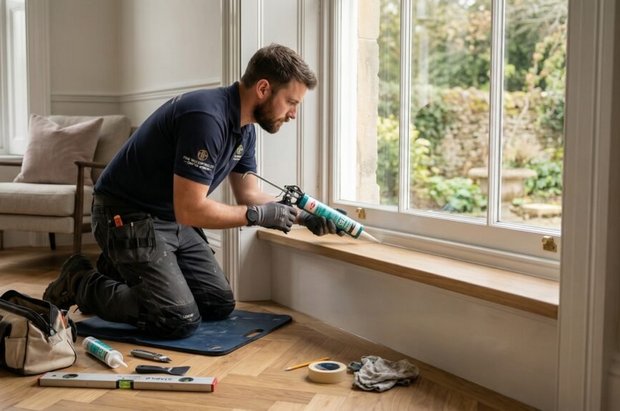
Why a Window Sill Repair Often Beats Full Replacement
The best repair jobs do not try to hide the problem. They remove the rotten timber, dry the area properly, treat the remaining wood, then rebuild the damaged section with matching timber or resin repair systems. Done well, the result is strong, neat, and far less wasteful than replacing the whole unit.
Why replace a whole sill when the damage usually sits in the outer few centimetres?
Here is the real industry view. Replacement sounds simpler because it feels decisive, but it often means more labour, more mess, and a harder match to the original profile. Old mouldings, deep sill throats, and traditional timber details are not always easy to replicate. If you love the character of your home, that matters.
What a Proper Window Sill Repair Involves
A real repair is not just filler and fresh paint. A good joiner will cut back to sound timber, apply rot treatment where needed, splice in a new section, then prime, seal, and repaint the surface so water cannot get back in. In older homes, this approach keeps the sash, architraves, and surrounding frame intact, which is especially useful when the rest of the joinery is still performing well.
Among these options, epoxy-based repairs tend to work best for shallow to medium rot in timber sills. They create a tough, stable surface and allow the original shape to stay intact. For deeper decay, timber splice repair is usually the better route.
How Window Repair Preferences Differ by Country
In the USA, many homeowners are pushed toward full replacement because big-box retailers sell complete window units as the default solution. Vinyl dominates a lot of the market, so repair can feel old-fashioned, even when it is the smarter choice.
In the UK, especially in Victorian and Edwardian homes, window sill repair is often the preferred route. Conservation areas, sash windows, and traditional timber details all make repair more attractive than replacement. A matching sill on a period property can be surprisingly difficult to source, and planning rules may favour retention anyway.
Across Europe, restoration culture runs strong. Apartment façades, historic streets, and energy retrofit projects often encourage targeted repair rather than wholesale removal. In Australia, harsh UV, wind, and coastal salt air punish exposed timber, so localised repair can be a practical middle ground when the frame is still sound.
Two Real-World Examples That Prove the Point
A homeowner in Bristol called about a bay window that looked beyond saving. The paint had lifted, the sill felt spongy at one corner, and the quote for replacement made her wince. After inspection, the rot was limited to the lower outer edge. A timber splice, fresh sealant, and repainting kept the original window in place and avoided weeks of disruption.
Another case came from a terrace house in Melbourne. The owners feared they would need a full window swap after storm-driven rain exposed a soft sill. The frame, however, was solid. A targeted repair, plus better weatherproofing, solved the issue. The result looked cleaner, and the home kept its original proportions.
These are not rare exceptions. They are the norm when the damage gets caught early.
When Replacement Is Still the Right Call
Let’s be honest. Repair is not a miracle cure.
If rot has spread into the frame, the jambs, or the structural elements around the opening, replacement may make more sense. The same goes for severe warping, repeated leaks, or insect damage that has hollowed out large sections of timber. At that point, patching becomes false economy.
Still, if the surrounding frame is sound, window sill repair usually offers the best balance of value, appearance, and performance. It keeps the original joinery working, avoids unnecessary waste, and often returns the window to service faster than a full replacement project.
The bigger trend now is clear. More homeowners want restoration with a lower carbon footprint, and more designers value original fabric over generic new parts. The challenge is skill, not demand. Good timber repair is highly specialised, and there are not enough craftsmen trained to do it well. That is why choosing the right specialist matters.