Legwear is having a moment few in the industry predicted. Thigh high socks, stockings, and statement tights, categories that spent two decades as afterthoughts in most apparel portfolios, have become some of the fastest growing segments in alternative and youth fashion. Behind the trend sits a set of textile engineering challenges that make legwear one of the more technically demanding categories in apparel, and understanding them explains why quality varies so dramatically across the market.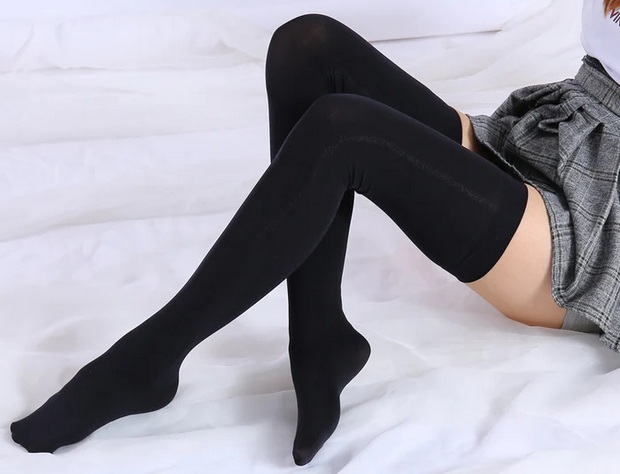
Why Legwear Is Harder Than It Looks
A thigh high sock is a deceptively complex product. It must stretch to accommodate a wide range of leg shapes, grip without compressing, hold its position through a full day of movement, and maintain colour and shape through repeated wash cycles, all while remaining comfortable against skin for hours at a time. Successful legwear engineering balances all of these performance requirements without sacrificing comfort.
The fibre composition does most of this work. Typical constructions blend cotton or polyester with elastane content between 3 and 10 percent, but the percentages tell only part of the story. Yarn quality, knit density, and the construction of the welt, the band at the top that keeps a thigh high in place, separate products that stay up from products that slide down by mid morning. Cheap constructions rely on tight elastic that restricts circulation; well engineered welts distribute grip across a wider band with silicone assistance, holding position without discomfort.
The Stretch Recovery Problem
The defining technical challenge in legwear is stretch recovery, the fabric’s ability to return to its original dimensions after extension. Poor recovery is why budget socks bag at the knees and ankles within weeks. Recovery performance depends on elastane quality and how the elastane is integrated during knitting: covered yarns, where the elastane core is wrapped in the primary fibre, dramatically outperform bare elastane blends over the garment’s life, but cost more to produce.
This is where the market’s growing quality segment becomes visible. The communities driving the legwear revival, particularly alternative and gender fluid fashion communities, where thigh highs are wardrobe staples worn frequently rather than occasionally, have developed sophisticated quality expectations. Retailers serving these audiences, with dedicated ranges of thigh high socks designed for daily wear across a broader range of body types, have made stretch recovery and welt engineering genuine selling points rather than invisible specifications.
Sizing Beyond the Standard Block
The other engineering shift worth noting is sizing. Traditional legwear sizing assumed a narrow anthropometric range. The current wave of demand comes from a far more diverse wearer base, including many male bodied wearers whose calf and thigh proportions differ meaningfully from the historical sizing block. Brands serving these markets have had to rethink graduated sizing, panel construction, and stretch allowances from first principles, which in several cases has produced legwear that fits the general population better than legacy sizing ever did.
What the Category Signals
For textile professionals, the legwear revival is a useful case study in how consumer communities can pull technical improvement through a category. The demand didn’t come from institutional fashion, it came from online communities with specific, repeated, well articulated quality needs. The manufacturers and brands that listened are now defining the category’s standards through better legwear engineering and product development.
That pattern, niche communities driving textile innovation faster than mainstream retail, is likely to repeat across other categories. Legwear just got there first.