The blue of blue jeans is closely linked with indigo, while denim washing creates faded or worn-out finishes. Dyeing and garment finishing can affect water and air quality and generate solid waste. Together, these effects help explain the environmental impact of denim processing. Research has reported toxic effects from indigo dye effluent and mutagenic effects associated with textile samples and wastewater. Effluent treatment and resource recovery are among the responses used to address these environmental impacts.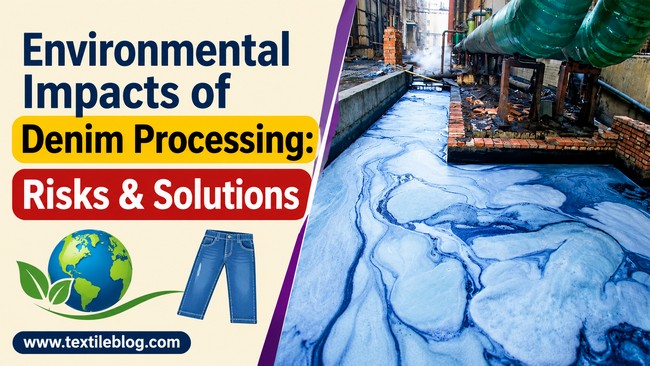
Indigo Dyeing and Denim Colour
Indigo dye is one of the numerous marketed organic colourants used to colour textiles, paper, leather and plastic, as well as for specialized applications such as food, drugs, cosmetics and photochemical production.
An archaeological study found that indigoid dye (indigotin) was used to colour cotton fabric that was 6,000 years old in Peru. It was supposed to be derived from the Indigofera species native to South America. Indigo is one of the most valued and most globally widespread dyes of antiquity and of the current era; it is the blue of blue jeans. Indigo obtained from the plant source (Indigofera tinctoria) has been used for more than a century. Synthetic indigo dye was introduced in 1897.
During the 1980s, indigo was combined with sulphur dye to acquire a new look and effects. Later, in the 1990s, to widen the denim colour range beyond blue, sulphur dye was used separately to obtain colours such as black, brown, olive and burgundy. The use of synthetic indigo and sulphur dyes poses a serious effluent problem.
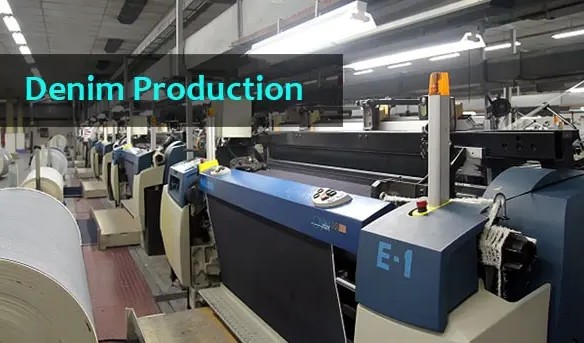
Three different dyeing techniques are used to dye the warp beam for denim weaving. More than 95% of warp dyeing for denim employs rope and slasher dyeing ranges.
Environmental Impacts of Denim Processing
The environmental impacts of denim processing can be classified into the following categories:
- Water pollution: dyeing and finishing effluent discharge in water bodies.
- Air pollution: cotton dust, abrasives and chemicals found in the air.
- Solid waste: sludge.
Water Pollution and Aquatic Toxicity
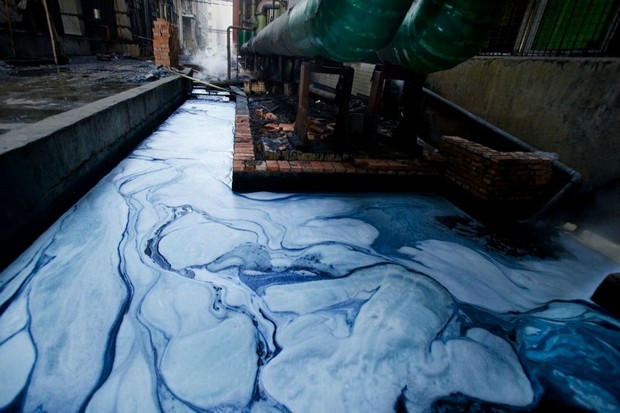
Ecological and toxicological problems caused by the direct discharge of textile wastewater into natural water bodies have been among the most important water pollution concerns. Textile effluents containing indigo dye and other dye types make water toxic and unfit for human and animal consumption, and cause an imbalance in the food chains of different aquatic ecosystems.
The presence of colour (dye), dissolved solids (TDS), total suspended solids (TSS), toxic (heavy) metals and residual chlorine in the effluent results in a high chemical oxygen demand (COD). The presence of organic pollutants leads to a high biochemical oxygen demand (BOD).
Five heavy metals (cadmium, chromium, mercury, lead and copper) were found in 17 out of 21 water and sediment samples taken throughout Xintang and Gurao in China. In one sample, cadmium exceeded China’s national limits by 128 times.
Various researchers have identified mutagenic effects in textile samples and wastewater from the textile industry. Their findings showed that dyes used for textile finishing are mainly responsible for the mutagenic effects observed. Indigo dye had a mutagenic effect on the bacterium Salmonella typhimurium.
A study reported that indigo dye effluents exhibited acute toxic effects on the microalgae Scenedesmus quadricauda. Therefore, there is a risk of disrupting the primary aquatic food chain when untreated indigo dye effluents are discharged into aquatic systems. These findings illustrate the environmental impact of denim processing on aquatic systems.
Another study examined the mutagenic effect of pure cotton, jeans fabric extracts and synthetic indigo, indirubin and isatin on S. typhimurium strains TA98 and TA100. Mutagenic effects on TA98 ± S9 and TA100 ± S9 were seen in extracts of both bleached and unbleached jeans. The mutagenic effects increased in the presence of S9. Synthetic indigo of a technical grade or 98% pure showed mutagenic effects, especially on TA98 + S9.
The researchers reported that indigo might cause a potential health risk either by revealing toxic effects of other compounds or by being a non-genotoxic carcinogen. If the effluent contains higher concentrations of indigo and indigoid dyes, it would be genotoxic.
Impacts of Denim Washing and Finishing
Denim washing is an aesthetic finish imparted to fabric to improve its softness and comfort. It also gives the fabric a different look, such as a faded or worn-out appearance.
Stonewashing
Pumice stone is used to stonewash denim garments. The machine is loaded with water (at a 1:5 material-to-liquor ratio), denim garments, pumice stone (half the volume of the garments), bleaching powder (4%) and soda ash (8%). The load is then processed for about 20 to 40 minutes.
The liquor is then drained, and the garments are given a hot wash at 40 to 50°C for 5 minutes and dried. The stone gets abraded during the process and becomes powdered; part of it remains in the liquor and part of it sticks to the garment. A huge amount of water is required for repeated washing cycles to remove the deposited pumice from the denim. The effluent and pumice dust lead to environmental pollution.
Sandblasting and Microsanding
Sandblasting is a mechanical finish which uses sand containing silica. The minute silica dust spreads in the air and poses a risk of serious respiratory disease, such as silicosis.
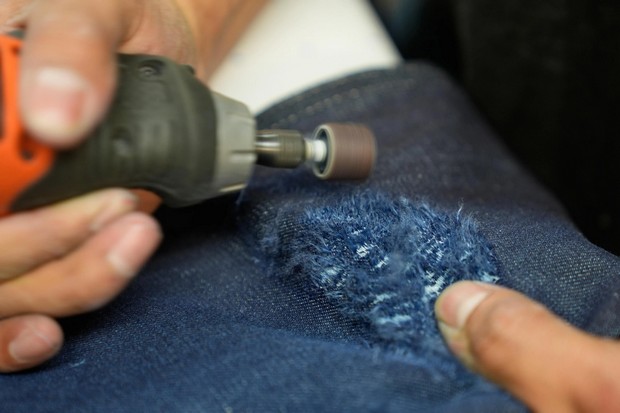
Microsanding is a finish which uses a series of rollers covered with abrasive paper or chemically coated abrasive. When the denim fabric is pulled over these rollers, it results in a soft, raised surface and dulls the colour. The abrasive material pollutes the environment.
Chemical and Acid Washing
Chemical washing, such as bleaching, employs chemicals such as sodium hypochlorite or potassium permanganate. It is harmful to human health and corrodes the stainless-steel drum of the bleaching machine. The effluent contains chlorinated organic substances, which cause severe pollution to the environment.
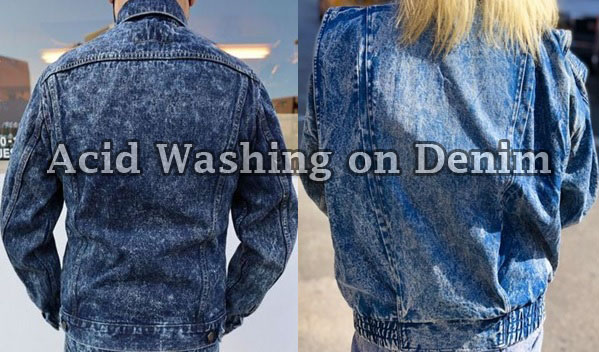
Acid wash uses both pumice stone and chemicals (sodium hypochlorite or potassium permanganate) for washing. It does not require water but leads to pollution. Using a smaller amount of stones does not give the expected look (bleaching effect), and using more stones damages the fabric and accessories and the machine itself. The acid damages the washing machine and the metal accessories used in the jeans. The effluent contains pumice dust and residual manganese, which are hazardous, and also cotton fibre dust as a result of abrasion caused by pumice stones. Acid-washed jeans have a tendency to yellow upon repeated use.
Life-Cycle Assessment of Jeans
In its life-cycle assessment, Levi Strauss & Co. studied the impacts of Levi’s 501 jeans on climate change and calculated carbon dioxide emissions throughout the jeans’ life using a cradle-to-grave approach. Consumer-phase emissions were found to be the highest, followed by the fabric-production phase.
Effluent Treatment and Resource Recovery
Suitable effluent treatment and resource recovery are important for addressing the environmental impact of denim processing. Denim dyeing effluent is heterogeneous in nature and demands a technologically sound system for the treatment and recovery of dyes and chemicals and the reuse of water. Based on the nature and complexity of the dyes and chemicals present in the effluent, a suitable treatment process can be employed. Different processes used include precipitation, degradation (catalytic, biological and photochemical), adsorption, filtration (ultrafiltration, microfiltration and nanofiltration), ozonation, coagulation and electrolysis.
Levi Strauss & Co. established Global Effluent Requirements for all of its supplier factories that finish or launder garments. The requirements state limits for pH, temperature, TSS, BOD, COD, colour, foam and heavy metals such as mercury, cadmium, lead, arsenic and copper.
DyStar and LoopTEC devised a closed-loop technology to reuse the wash water and recycle indigo on denim dyeing ranges. The technology recovers and reuses 99% of the wash water, recovers 99.9% of the indigo from the wash water, eliminates 96% of salt use and reuses the recovered indigo liquor, which is highly concentrated.
Conclusion
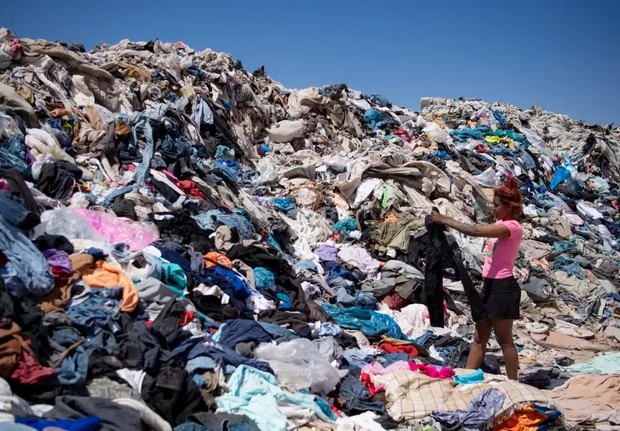
Denim processing can affect water, air and solid-waste streams through dyeing effluent, washing chemicals, silica and pumice dust, and sludge. Research has reported acute toxicity to microalgae and mutagenic or genotoxic effects associated with indigo and denim samples, while the life-cycle assessment found consumer-phase emissions to be highest, followed by fabric production. Treatment processes, supplier effluent requirements and closed-loop recovery offer approaches for addressing these impacts. Continued attention to treatment and resource recovery will remain important as denim dyeing and finishing practices evolve.
References
[1] Muthu, S. S. (2017). Sustainability in denim. Woodhead Publishing.
[2] Paul, R. (Ed.). (2015). Denim: Manufacture, Finishing and Applications (1st ed.). Woodhead Publishing.
[3] Blackburn, R. S. (Ed.). (2009). Sustainable Textiles: Life Cycle and Environmental Impact (1st ed.). Woodhead Publishing.
[4] Clark, M. (Ed.). (2011). Handbook of Textile and Industrial Dyeing: Principles, Processes and Types of Dyes (Vol. 1, 1st ed.). Woodhead Publishing.
[5] Schindler, W. D., & Hauser, P. J. (2004). Chemical Finishing of Textiles (1st ed.). Woodhead Publishing.
[6] Splitstoser, J. C., et al. (2016). “Early pre-Hispanic use of indigo blue in Peru.” Science Advances, 2(9), e1501623. https://doi.org/10.1126/sciadv.1501623
[7] Levi Strauss & Co. (2015). The Life Cycle of a Jean: Understanding the Environmental Impact of a Pair of Levi’s® 501® Jeans [Life-cycle assessment report].