When a textile mill receives staple fibers, the material has already begun a long journey toward yarn formation. Making yarns from staple fibers is more complex and expensive than making filament yarns, and the fibers go through a series of steps before they become usable yarn. Some of these steps are required for all yarns and fibers, while some are optional. The exact process depends on the fiber type, the yarn quality desired, and the spinning system being used.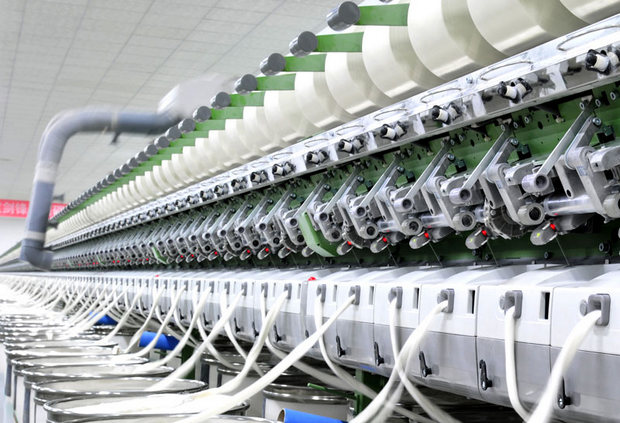
Preparation of Staple Fibers for Spinning
Blending Staple Fibers
It is sometimes desirable to blend two or more different fibers into one yarn. Frequently, manufactured fibers are blended with natural fibers to take advantage of the best qualities of each fiber. In other blends, the combination may be made to reduce the cost of the fabric by blending a less expensive fiber with a more expensive one, as in cashmere/wool blends, or blending may be done to achieve decorative effects.
Blending may be done at one of several steps in the preparation of yarns from staple fibers: during opening, during carding, or during drawing out. For 100 percent cotton yarns, blending of fibers from different bales is done to even out bale-to-bale differences. The dust and dirt remaining in cotton bales, however, make it undesirable to blend in a manufactured fiber such as polyester at this stage. So blending is usually done during the later drawing step. No matter when blending is done, quantities of each fiber to be used are measured carefully, and the proportions of one fiber to another are consistently maintained.
Breaking and Opening Bundles
Bales of fiber may be opened either by hand or by machine. Many modern textile mills have completely mechanized this process. The trend toward mechanization of opening cotton bales has been accelerated by the requirements of the Occupational Safety and Health Act that workers’ exposure to cotton dust be limited. As noted earlier, high levels of cotton dust are associated with a lung disease called byssinosis.
Cleaning Fibers
Cotton contains impurities such as sand or grit and particles of leaf, stalk, and seeds. Many of these are removed during opening, and further removal occurs during the carding step described below. New wool that has not previously been cleaned contains vegetable matter, sand, dirt, and grease. Raw wool is scoured in warm, soapy water to remove the dirt and grease.
Manufactured fibers do not require cleaning, but if they have been compressed for packing and shipping, they need to be opened and the fibers separated so bunches of fibers do not cling together and form thick areas, or slubs, in the yarn.
Systems for Processing Different Types of Staple Fibers
Processing of fibers in preparation for spinning may be done on one of three major spinning systems: the cotton, the woolen, or the worsted, also called long-staple, system. These systems were developed at the time when only natural fibers were in use; therefore, the different characteristics of the fibers, including their length, helped to shape the processes used. Manufactured staple fibers can be handled on any of these systems. More yarn is produced on the cotton system than on the worsted or woolen system.
Fiber Preparation by the Cotton System
Increased automation in yarn production has largely eliminated the initial steps of loosening and separating lumps of fiber and the subsequent formation of a lap, a flattened, fairly uniform layer of fibers. Instead, the opening and transport of fiber to the carding machine are done in a more or less closed system.
Carding
The carding machine consists of an inner cylinder and an outer belt, both set with hundreds of fine wires. The intermeshing wires separate the fibers and pull them into somewhat parallel form. The wire teeth also remove trash and entangled lumps of fibers called neps. A thin web of fiber is formed in this machine, and as the web is moved along, it passes through a funnel-shaped device that forms it into the sliver, which is a ropelike strand of roughly parallel fibers.
Blending can take place at the point of carding by joining quantities of different fibers. Carding mixes the blend fibers together, distributing them evenly throughout the mass of fiber.
Combing
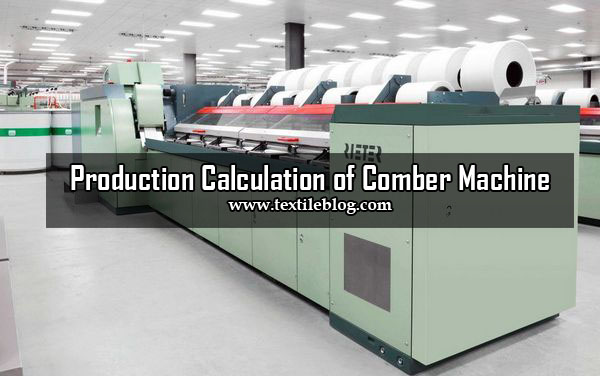
Whereas carding is a step in the production of all fibers, combing is an optional step in the preparation of some yarns. When a smoother, finer yarn is wanted, fibers are subjected to a further paralleling called combing. A comblike device arranges fibers into parallel form. At the same time, it removes the short fibers as well as most remaining neps or impurities.
Combed yarns have smooth surfaces and finer diameters than do carded yarns. Because the shorter fibers have been removed, fewer short ends show on the surface of the fabric, and the luster is increased. Combed yarns are more expensive to produce, and fabrics made from combed yarns are therefore higher in price. Far more of the yarn produced on the cotton system is carded than that which is both carded and combed. When products are made from fabric with combed yarns, this is often advertised to the consumer.
Drawing
Several slivers are combined in the drawing process. Blending of fibers can be done by combining slivers of different fibers, and this is where cotton is usually blended with manufactured fibers. During the drawing, a series of rollers rotating at different rates of speed elongates, or draws out, and attenuates the sliver into a single, more uniform strand that is fed into large cans. Uniformity is important because a slightly thin place in a fat sliver will become a very thin and weak spot when the final yarn is made.
Within the card sliver is a substantial proportion of fibers with hooked ends. These hooks are formed as the fibers are moved along by the carding machinery. Their presence reduces the effective length of the fiber, and if these hooks are not removed, the yarns produced will be weaker. Subsequent drawing steps help to eliminate some hooks. Carded slivers are drawn twice following carding. Combed slivers are drawn once before combing and twice more after combing. It is at this point in the process that the sliver can be converted into yarn by first forming a roving and then forming a yarn through traditional ring spinning, or alternatively, yarns can be made directly by the open-end methods described later.
Roving
The sliver is fed to a machine called the roving frame. Here, the strands of fiber are elongated still more by a series of rollers. As they are wound on the bobbins, they are given a slight twist. The product of the roving frame, an elongated, slightly twisted strand of fibers, is called the roving.
Fiber Preparation by the Woolen System
A wide range of wool types, but generally the shorter fiber varieties, can be spun on the woolen system. Manufactured staple fibers can be blended with the wool fibers and spun on the woolen system as well.
Because they have been scoured and contain no grease, as the fibers are blended, a small amount of oil is added to the fiber to facilitate processing, and the fibers are carded. Because wool fibers are longer and have better cohesion and wool carding is a more thorough process, rovings can be produced directly from the carding machine. Thus, the carded web is divided into strips by a condenser, following which a slight amount of twist is introduced by subjecting the strips to a rubbing motion to form rovings. Final twist and yarn formation are subsequently imparted, usually on a ring spinner. Some authors prefer to call the woolen system the condenser system because fibers other than wool are often prepared by this system.
Woolen yarns are soft and bulky. They have many fiber ends on the surface of the yarn, giving them a fuzzy appearance and hand. This results from omission of the drawing processes that would have straightened the fibers. Woolen yarns are weak and have poor abrasion resistance.
Fiber Preparation by the Worsted System
The worsted system is used for longer and finer varieties of wool and can also be used for manufactured staple fibers in appropriate lengths. If wool fiber is being processed, it is cleaned then processed either dry or with oil added to lubricate the fibers. Carding is followed by preparation of fibers for combing. Before combing, the fibers are subjected to gilling, which is comparable to drawing. The fibers pass through gill boxes in which pins control the movement of short fibers and minimize the development of unevenness in slivers while also assisting in straightening of fibers.
The initial product of wool combing is the separation of shorter fibers, called noils, which are still long enough to be useful in the manufacture of woolen yarns. The remaining ropelike strand of fibers is called top. Wool tops may be dyed or printed to achieve multicolor effects in the final yarn. Tops are gilled, combed, and finally drawn into roving and spun into yarns.
Worsted yarns are smooth, sleek, and compact in appearance, with few fiber ends on the surface of the yarn. Their strength is better than that of woolen yarns, and their hand is crisper.
The semiworsted system is a variation of worsted spinning that omits combing. Yarns produced are not as smooth, lean, or lustrous as worsted yarns, but processing is cheaper.
Processing of Flax Fibers
The length of flax fibers requires that they be processed somewhat differently from either wool or cotton. The final cleaning of flax is accomplished by a hackling machine, a device that has a revolving belt set with pins that remove short fibers, entangled fibers, and vegetable matter. The pins bring the linen fibers into alignment.
Flax fibers that are comparable to carded fiber after hackling are referred to as tow or hackled fibers; those comparable to combed fibers are referred to as line or well-hackled fibers. The same terms are applied to the yarns made from these fibers. The processes used in preparing flax fiber for spinning are intended to take advantage of the strength and luster of these long fibers. Precise steps vary, depending on whether tow or line fibers are being handled. Also, either wet or dry processing can be utilized. Wet processing produces the finest, strongest, and smoothest yarns.
Transforming Filaments into Tow
Tow is a bundle of filaments that will be broken or cut into staple lengths. One of the advantages of starting with tow for spinning a staple yarn is that, unlike cotton, wool, and other natural fibers, the tow fibers are aligned and parallel and need not be combed or carded to make them ready for spinning. The fibers can be said to go from tow to sliver, or tow-to-top, in one operation.
Specialized machines, called converters, cut a flat web of tow into the desired staple length. Fibers may be cut into uniform or variable lengths and crimped to provide better cohesion in subsequent processing. The web of cut fibers is then rolled into a sliver of staple fibers.
A second method of converting tow-to-top is to break the fibers into staple lengths. Tension is applied to pull the stretched tow across a breaker wheel, a cog wheel with sharp, protruding edges. The filaments break on the sharp edges. Stretch breaking is most effective with synthetic fibers but less useful in cutting manufactured cellulosic fibers. During stretch breaking, the fibers are extended and must be treated to relax them or yarns will show a good deal of relaxation shrinkage. If a sliver of stretch-broken, crimped, relaxed staple is blended with a sliver of stretch-broken, crimped, but not relaxed staple, the bulking properties of the resulting yarns are much improved.
Insertion of Twist into Yarn
The systems described above for preparation of fibers for spinning are preliminary to the final yarn formation. A variety of different means can be used to join fibers together to form a yarn. The predominant commercial systems of yarn formation are ring spinning and open-end spinning.
Ring Spinning
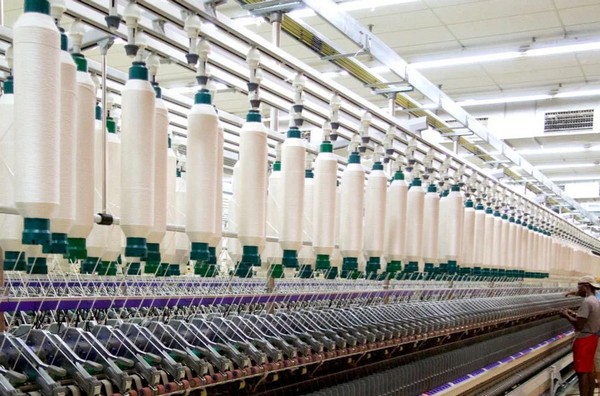
The ring spinner is made up of the following parts: spools on which the roving is wound, a series of drafting rollers through which the roving passes, a guiding ring or eyelet, a stationary ring around the spindle, a traveler, a small U-shaped clip on the ring, a spindle, and a bobbin.
The roving is fed from the spool through the drafting rollers. The rollers elongate the roving, which passes through the guiding ring, moving down and through the traveler. The traveler moves freely around the stationary ring. The spindle turns the bobbin at a constant speed. This turning of the bobbin and the movement of the traveler impart the twist to the yarn. The yarn is twisted and wound onto a bobbin in one operation.
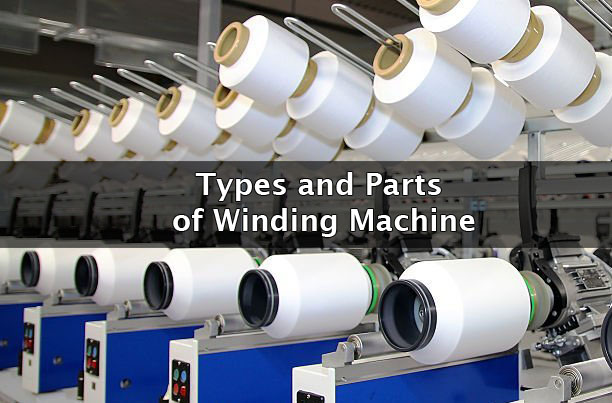
Bobbins must be removed from the machine when full, a process called doffing. From here, bobbins are transported to a winding machine where yarn is wound onto packages. Automated systems for doffing and winding have been developed and are widely used. Winding is considered an important step. It provides an opportunity to condition yarn, that is, to bring the yarn into equilibrium with the moisture in the atmosphere, and to add wax or other coatings that will facilitate weaving. Winding also allows the identification of flaws in the yarn and formation of yarn packages larger than the spindles on the spinning frame.
The ring-spinning technique produces finer and stronger yarns than can be made by other competing processes. However, by the 1960s, the rotation speed of the spindle, which began at four thousand revolutions per minute, seemed to have reached an upper limit at about twelve thousand revolutions per minute. At higher speeds the traveler burns and must be replaced frequently. These maximum speed limitations gave impetus to the development of alternate twisting systems that operated at higher speeds. Although ring spinning continued to hold an important place in the production of yarns, other systems, most notably the open-end spinning systems, seemed likely to replace ring spinning for certain sizes and types of yarns. Recently, ring spinning has made a comeback, however, for the following reasons: speeds have increased to twenty-one thousand revolutions per minute, demand for finer-count yarns has increased in the past several years, and increased automation and improved quality control have helped to lower costs of manufacturing.
Open-end Spinning
Because of the speed limitations in ring spinning, researchers concentrated on developing techniques for inserting twist into yarns that would permit more rapid production. A result of this search was the introduction, in the 1960s, of the open-end rotor spinning machine, which operated at higher speeds but produced a yarn with slightly different characteristics than conventional ring-spun yarns.
Open-end spinning omits the step of forming the roving. Instead, a sliver of fibers is fed into the spinner by a stream of air. The sliver is delivered to a rotary beater that separates the fibers into a thin stream. They are carried into the rotor by a current of air through a duct and deposited in a V-shaped groove along the outer edge of the rotor. Twist is provided by the rapid spinning of the rotor.
Fibers fed to the rotor are incorporated into the rapidly rotating open end of a previously formed yarn that extends out of the delivery tube; hence, the name open-end spinning. As the fibers join the yarn, which is constantly being pulled out of the delivery tube, twist from the movement of the rotor is conveyed to the fibers. A constant stream of new fibers enters the rotor, is distributed in the groove, and is removed at the end of the formed yarn, becoming part of the yarn itself. The process is roughly analogous to the spinning and take-up of cotton candy.
The fineness of the yarn is determined by the rate at which it is drawn out of the rotor relative to the rate at which fibers are being fed into the rotor. In other words, if fewer fibers are being fed in while fibers are being withdrawn rapidly, a thinner yarn will result, and vice versa. The twist is determined by the ratio of the rotor turning speed to the linear or withdrawal speed of the yarn, that is, the higher the speed of the rotor, the greater the twist. Open-end friction spinning systems use friction to insert twist. A mixture of air and fibers is fed to the surface of a moving, perforated drum. Suction holds the fibers against the surface while a second drum rotates in the opposite direction. Twist is inserted and the yarn begins forming as the fibers pass between the two drums. The newly forming yarn is added to the open end of an already formed yarn, and the completed yarn is continuously drawn away.
The advantages of open-end spinning are that it increases the speed of production, eliminates the step of drawing out the roving before spinning, and permits finished yarns to be wound on any sized bobbin or spool. As a result, it is less expensive. It produces yarns that are more uniform in size and strength than ring-spun yarns. They are also bulkier, rougher, and more absorbent. Neither friction nor rotor spinning will produce yarns as fine and strong as ring-spun yarns, although recent advances have extended the range of yarn sizes possible. Ring spinning is also more versatile for producing complex, fancy yarns.
Fabrics made from open-end-spun yarns compared with ring-spun yarns are more uniform and more opaque in appearance, lower in strength, less likely to pill, and inferior in crease recovery and hand. Products that seem to be especially well suited to the use of open-end-spun yarns are toweling, denim, and heavier weights of bed sheeting. The yarns’ even surface makes them desirable as base fabrics for plastic-coated materials. On the other hand, the more acceptable feel of ring-spun yarns has led knitwear manufacturers to prefer them, and they are better for fine blends of polyester and cotton.
Conclusion
Staple yarn production follows a carefully ordered sequence, from opening and cleaning fibers to carding, drawing, roving, and final twist insertion. The exact path changes with the fiber, whether it is cotton, wool, worsted wool, flax, or tow, and with the type of yarn that is needed. Ring spinning and open-end spinning remain the main commercial systems, each with its own strengths in quality, speed, and cost. In practice, the best choice is the one that fits the fiber and the end use most closely, and that balance will continue to shape staple yarn manufacturing.