Water Reduction in Textile Dyeing
Tahmidur Rahman
B.Sc. in Textile Engineering
Textile Engineering College, Zorargonj, Chattogram
Introduction:
The textile dyeing industry is a significant contributor to water pollution and water scarcity, with approximately 200 tons of water used to dye one ton of fabric[4]. To address this issue, the industry is exploring various methods to reduce water consumption and improve sustainability. A practical first step in a mill is to map where the water goes, especially in washing, rinsing, and start-up runs. That gives a clearer picture of which changes will save the most water without disrupting production.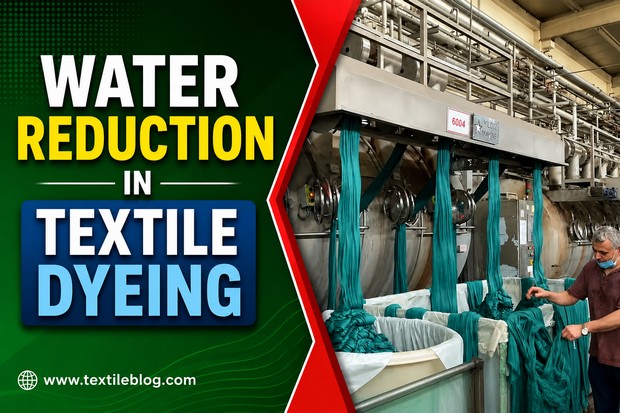
Waterless Dyeing:
Waterless dyeing systems, such as those developed by DyeCoo, use carbon dioxide (CO₂) instead of water to dye textiles[4]. These systems can save 15 million liters of water and 6,500 kilograms of processing chemicals annually[4]. Companies like Nike, Adidas, and IKEA have adopted waterless dyeing to reduce their environmental footprint[4]. For mills considering this route, the main question is whether the existing line can be adapted or whether a separate setup is needed. This is usually a strategic decision, not just a technical one.
Innovative Dyeing Technologies:
Innovative dyeing technologies, such as the UP system and Core, reduce water consumption by up to 96% compared to traditional methods[5]. These technologies also reduce energy consumption and enable the production of smaller batch sizes more cost-effectively[5]. This matters when a factory wants lower water use without moving away from controlled batch production. It is often a practical middle ground between conventional dyeing and a full process change.
Sustainable Dyeing and Finishing:
Sustainable dyeing and finishing approaches, such as the PS²-Process and PSB35, offer resource savings and increased efficiency[5]. These technologies can save up to 1,350 tons of CO₂ emissions annually and reduce start-up scrap rates by 90% compared to traditional methods[5]. In day-to-day production, start-up scrap is one of the easiest places to measure improvement. If that number falls, the process usually becomes easier to manage as well.
Water Recycling and Reuse:
Technologies like the THEN Smartflow TSF dyeing machine from Fong’s Europe reduce water and energy consumption through water recycling and reuse[5]. This machine features a Smart Fabric Transport System that ensures even dyeing of the fabric by accurately controlling nozzle pressure and pump power[5]. Water recycling works best when shade consistency is already under control. If the fabric is uneven, the benefit of reuse can disappear quickly in rework and rejection.
Collective Action and Collaboration:
Brands and retailers, along with their suppliers, can work together to address water issues through collective action and collaboration[2]. Initiatives like the Bangladesh Partnership for Cleaner Textile (PACT) and the Better Mills Initiative can help brands and retailers reduce their water consumption and improve local water conditions[2]. In practice, this means water data should be part of supplier discussions, not only final product checks. That makes the improvement measurable instead of symbolic.
Conclusion:
The textile dyeing industry is exploring various methods for water reduction and improve sustainability. Waterless dyeing systems, innovative dyeing technologies, sustainable dyeing and finishing approaches, and water recycling and reuse technologies are all contributing to a more sustainable future for the textile industry. Collective action and collaboration among brands, retailers, and suppliers are also essential to address water issues and improve local water conditions. Taken together, these approaches show that water reduction is most effective when process change and supply chain cooperation move together. That is where the next practical gains are likely to come from.
References:
[1] Economical use of water in cotton knit dyeing industries of Bangladesh https://www.sciencedirect.com/science/article/abs/pii/S0959652622004632
[2] Water Footprint Assessment https://waterfootprint.org/resources/WS2_Executive_Summary_for_CA_by_WFN.pdf
[3] The true cost of colour: The impact of textile dyes on water systems https://www.fashionrevolution.org/the-true-cost-of-colour-the-impact-of-textile-dyes-on-water-systems/
[4] Waterless fashion: does the dyeing industry need to use water? https://www.euronews.com/green/2019/07/18/waterless-fashion-does-the-dyeing-industry-need-to-use-water
[5] Reducing carbon footprints and water consumption through sustainable dyeing and finishing https://www.texspacetoday.com/reducing-carbon-footprints-water-consumption-sustainable-dyeing-finishing/
Frequently Asked Questions (FAQs)
Q1. What is waterless dyeing in textile industry?
Ans: Waterless dyeing uses carbon dioxide instead of water to dye textiles. It is mainly used to cut water use, chemical use, and wastewater load.
Q2. How can textile mills reduce water consumption in dyeing?
Ans: Mills can start with water recycling, reuse systems, and better control of washing and rinsing steps. A water audit usually shows where the first savings are easiest to make.
Q3. Is waterless dyeing used by Nike, Adidas, and IKEA?
Ans: The original article says these companies have adopted waterless dyeing to reduce their environmental footprint. Readers should check the latest company sustainability reports for the most current status.
Q4. Which textile dyeing technology saves the most water?
Ans: The article mentions the UP system and Core as reducing water consumption by up to 96% compared to traditional methods. The best option still depends on the mill, fabric type, and production setup.