Clear printed patterns depend on a smooth fabric surface, and even slight fuzz can leave a print hazy or blurred. Singeing burns off projecting fibers that can cause roughness, dullness, and pilling or interfere with finishing. The process also prepares fabric for later operations, while heat-sensitive blends require careful treatment. This article outlines the working methods, uses, advantages, and limitations of the three main singeing-machine types.
What Is Singeing?
Singeing burns fiber ends, hairy fibers, and loose threads projecting from the surface of the fabric. These protruding ends cause roughness and dullness, encourage pilling, and interfere with finishing.
In the weaving process, the warp yarn is passed through the warp wires and tubes of the loom. During this process, some fibers move out from the surface of the yarn. Constant friction between the heald wire and the yarn makes it hairy; these fibers are called projecting or floating fibers.
Singeing in Wet Processing
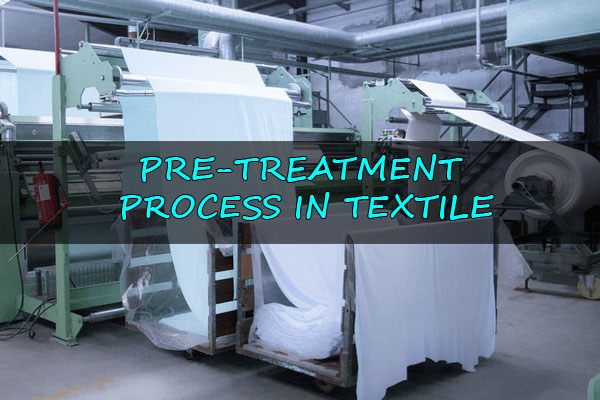
Four major processes are used to make a complete garment, whether wearable or non-wearable: yarn manufacturing, fabric manufacturing, wet processing, and apparel manufacturing. In wet processing, the textile substrate is treated with colorants and/or chemicals, collectively referred to as inputs in GOTS terminology.
There are four major sections under wet processing. Singeing is part of the pretreatment section and is the most important part of fabric pretreatment.
Objectives and Uses of Singeing
Singeing is a must for making the fabric smooth and shiny. Apart from this, singeing is necessary to make subsequent fabric processes easier and to keep the fabric free from creasing.
Singeing may be the first finishing operation for smooth-finished cotton or cotton-blend fabrics and for clear-finished wool fabrics. Fabrics containing heat-sensitive fibers, such as cotton/polyester blends, must be singed carefully and are often singed after dyeing because the melted ends of the polyester may cause unevenness in color.
Singeing is one way to minimize pilling. In fabrics made from polyester and cellulosic fiber blends, it is the best method to control pilling. Sometimes, double singeing is done to minimize it.
Singeing is used to give a smooth surface to fabrics that will be printed so that the print remains sharp and clear, with crisp and distinct edges of the print pattern. Even a slightly fuzzy surface would produce a hazy or blurred print.
Types of Singeing Machines
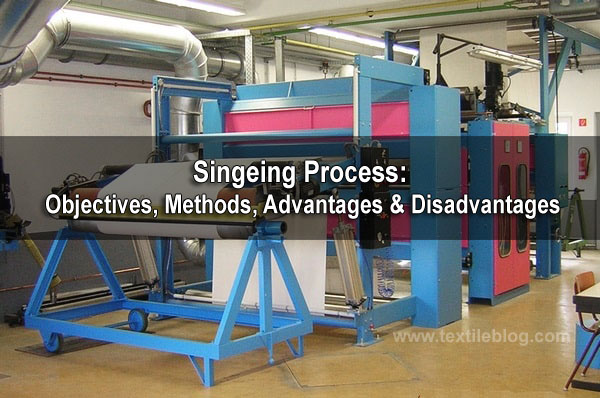
Three main types of singeing machines are used: plate, gas or flame, and cylinder or roller. The fabric is passed between two gas flame bars or hot plates to singe it on both sides in one step.
A. Plate Singeing Machine
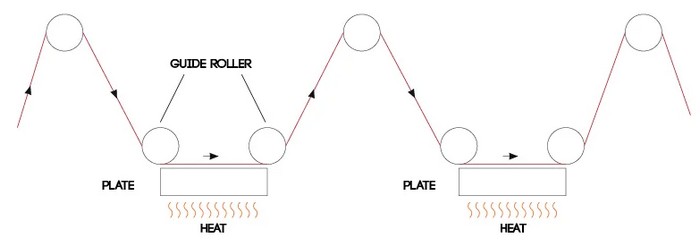
Working Principle: In this method, the cloth passes over and in contact with one or two heated, curved copper plates. The plates are 1 to 2 inches thick (2.5 to 5 cm) and are heated by a suitable burning arrangement using gas mixed with air. They are heated to bright redness, at about 750°C, and the cloth passes over them at a speed of 150 to 250 yards per minute so that the protruding fibers are burned off instantly.
The passage of the cloth can be arranged so that one or both sides pass over and in contact with the heated plates, singeing either or both sides in a single passage. To avoid local cooling caused by the constant passage of cloth over the same area, an automatic traversing mechanism brings the cloth into contact with a constantly changing part of the plates. This also helps avoid local wear. Contact between the cloth and the hard, hot metal surface produces a certain amount of luster in the fabric.
Advantages and uses: The method provides uniform singeing and is very suitable for back-filter finishing.
Disadvantages: Plate singeing is almost obsolete and requires more labor. The hard, hot surface can make the fabric harsh. Fibers in the interstices of the warp and weft are not singed because they are not accessible. Maintaining a uniform plate temperature is difficult, and any disturbance can result in uneven singeing.
B. Rotary-Cylinder or Roller Singeing Machine
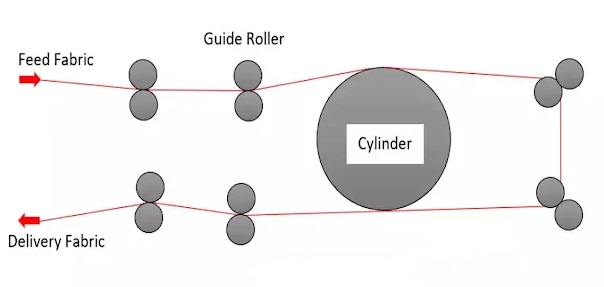
Working Principle: Roller singeing was the next development in machine design, intended to achieve more perfect singeing. In this method, the cloth passes over and in contact with a heated rotary cylinder made of copper or cast iron, with internal firing. The singeing surface and the fabric move to produce more even singeing. The cylinder rotates slowly, continually presenting a fresh heated surface to the cloth. It rotates in the opposite direction to the fabric, helping remove the protruding fibers.
Special traversing arrangements for the fabric help prevent local cooling and wear of the metallic parts. If both sides of the fabric need to be singed, two cylinders are used, one for each side.
Uses and advantages: Back-filling during finishing is not a problem, and the machine is suitable for cotton velvet.
Disadvantages: Friction from the cylinder decreases the brightness of the fabric, and fiber ends of the warp and weft are not singed properly. Uneven singeing may also occur.
C. Gas or Flame Singeing Machine
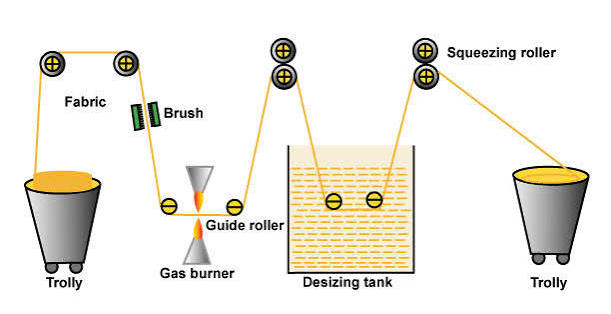
Working Principle: Because of problems with plate and roller singeing machines, gas singeing machines were designed so that the fabric would not touch a hot surface during singeing. A widthwise flame is created, and the fabric is passed through it to burn off fibers and produce a clean surface. The fabric passes over the burning gas flame at such a speed that only the protruding fibers burn and the main body of the fabric is not damaged.
This is the most commonly used type for fabrics and yarns, including woven and knit fabrics. The machine can singe both sides of the fabric. First, the fabric is drawn onto the guide roller, and brushing is done on both sides so that the flying fibers stand sufficiently.
A water-cooled roller is provided opposite the burners so that the strength of even thin fabrics is not undermined. The drain temperature of the water-cooled roller ranges from 50 to 55°C. Care is needed because if the roller is cooled down too much, a dew point is generated, increasing the amount of remaining fuzz or adhered carbon. The fabric feed speed is 100 to 150 m/minute.
After singeing, the fabric is immersed in water or a desizing tank to prepare it for the next process.
Advantages: Uniform temperature ensures proper singeing, and both sides of the fabric can be singed. As the process is continuous, there is no interruption to production. After singeing, fabrics are easily cleaned. It is a standard process and gives ideal singeing.
Disadvantages: It is not suitable for synthetic fibers. The burner can produce spots on the fabric, and inconsistent fabric speed may cause the fabric to burn.
Frequently Asked Questions
Q1. What does GOTS mean?
The Global Organic Textile Standard (GOTS) has a clearly defined set of criteria and is transparent. It is the worldwide leading textile processing standard for organic fibers, including ecological and social criteria, backed by independent certification of the entire textile supply chain.
Q2. Which type of singeing is more popular: gas, plate, or roller?
Gas singeing is more popular than plate and roller singeing.
Conclusion
Singeing removes projecting fibers and leaves a smoother surface for finishing and printing, while helping control pilling. Plate and roller machines use heated metal surfaces, whereas gas machines use a flame; each type has its own working method and limitations. Gas singeing is the most popular of the three, but heat-sensitive blends still need careful treatment. As fabrics proceed to later finishing and printing steps, careful singeing will continue to help prepare a smooth surface.